
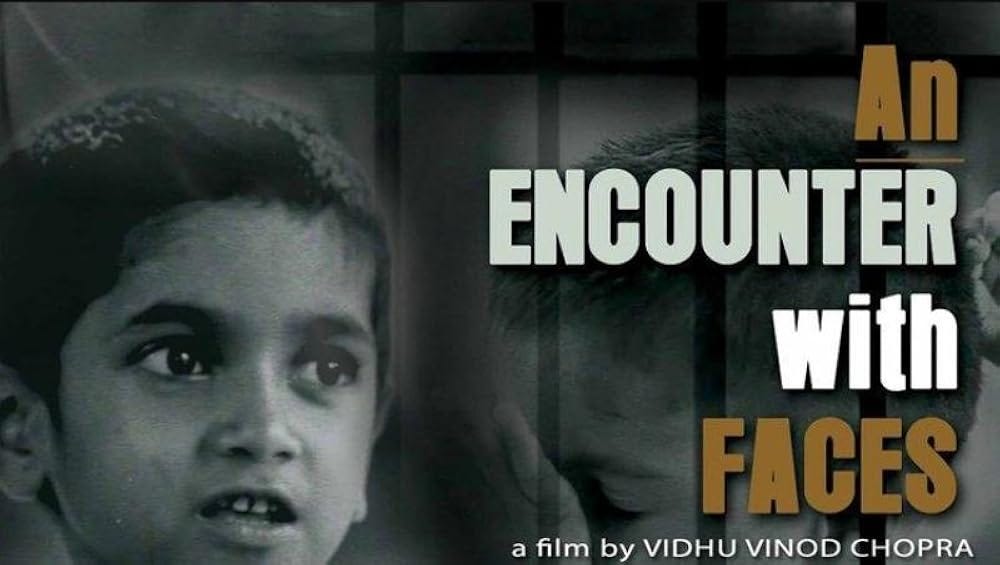
In 1978, a young Vidhu Vinod Chopra made An Encounter with Faces — a 21-minute documentary about the children’s homes at Dongri and Mankhurd in Bombay, nominated for the Academy Award for Best Documentary Short Subject. In it, the delinquent children themselves speak: not voiceover subjects, but witnesses to a system that has already absorbed them. Eleven years later, Chopra returned to the same city’s children in Parinda (1989), where Kishan and Karan are orphaned brothers sleeping on footpaths. Every major character in the film is an orphan.
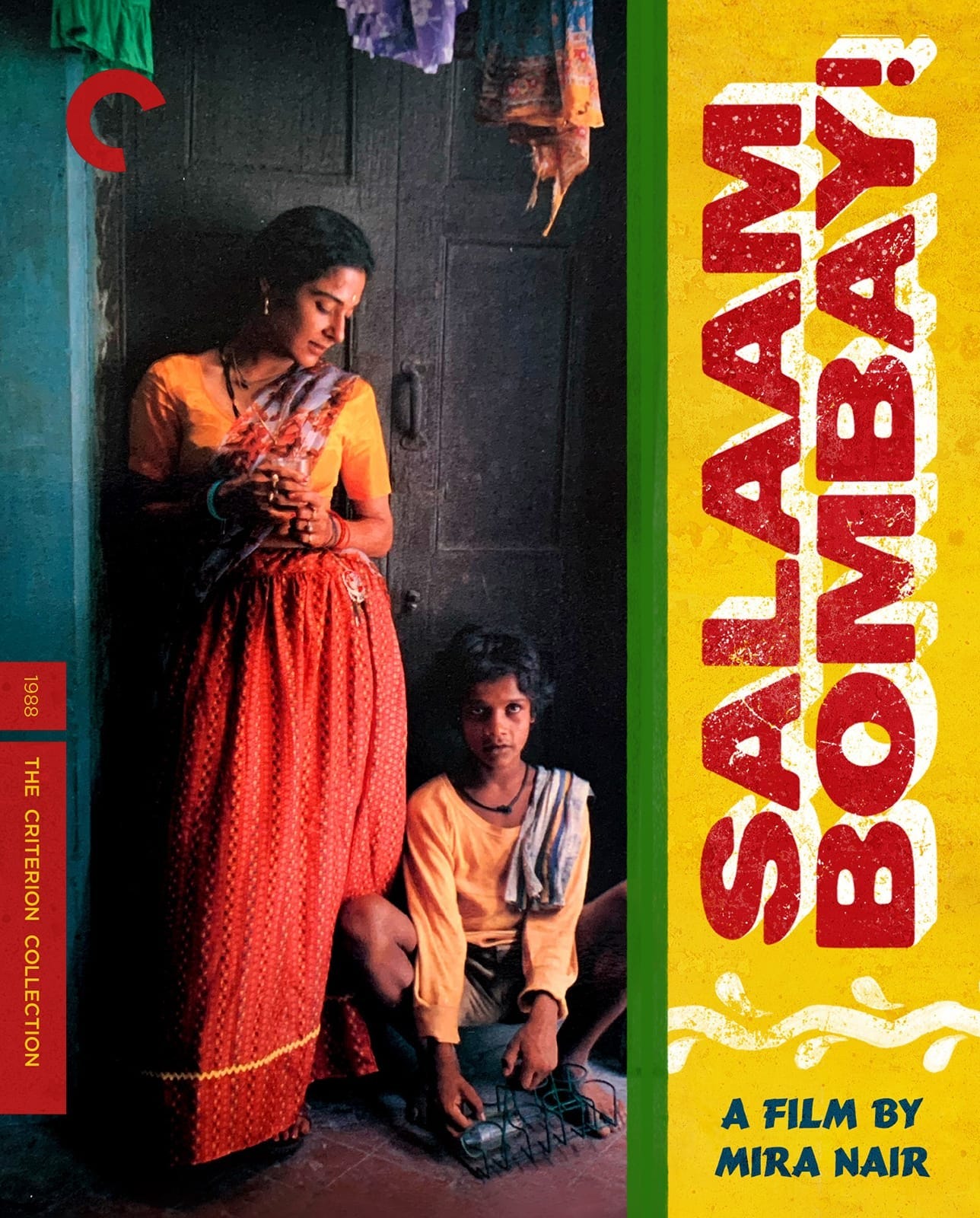
A year before Parinda, Mira Nair had already put the same city’s children on screen. In Salaam Bombay! (1988), a boy named Krishna arrives at a Bombay train station and immediately ceases to be Krishna. He becomes Chaipau — teaboy — because that is what he does. Names are replaced by functions: Chaipau serves tea, Chillum deals hash, Solasaal is valued for being sixteen. The city doesn’t expel these children. It absorbs them, renders them invisible, and puts them to work — a “fractal gaze” that systematically ignores the unpleasant.
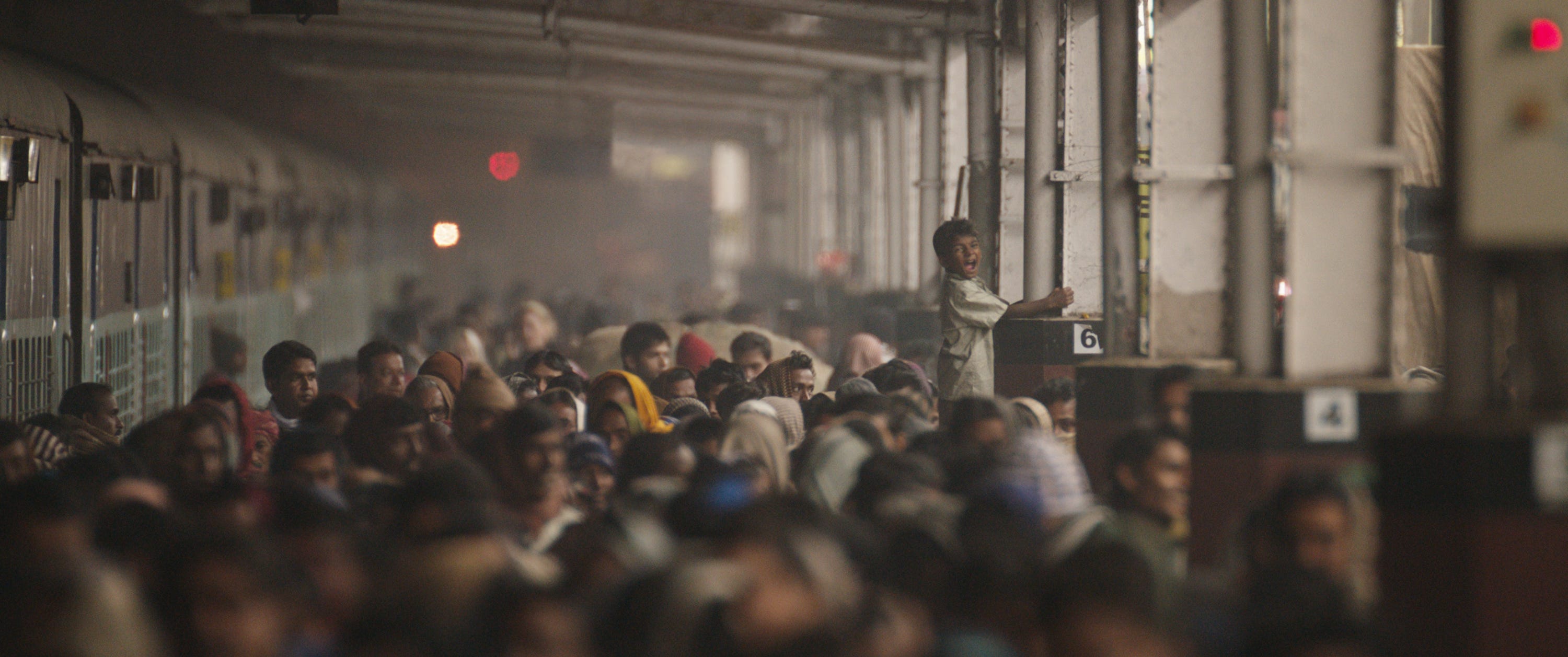
In Garth Davis’s Lion (2016), a five-year-old falls asleep on a train and wakes up 1,500 kilometres away in Kolkata, survives the streets, nearly gets trafficked, and is eventually adopted by an Australian family. But the system failure it depicts — a child lost in plain sight at a railway station, unclaimed, unnamed, absorbed into a city with no mechanism to find him — is not a story. It is a Tuesday.
We notice India’s vulnerable children once every decade or so, when a filmmaker makes them visible. Between films, they disappear. Not from the streets — from our consciousness.
India’s Bal Swaraj portal records 19,546 children living on streets, of whom 882 live entirely alone. The India Alternative Care Network (IACN) documents that approximately 170 million Indian children — close to 40% of the child population — experience “difficult circumstances.” UNICEF estimates 29 million orphans.
The gap between these numbers is itself a measure of invisibility.
The Shelter Home
In Salaam Bombay!, Krishna ends up in a government remand home. Nair films the scene with deliberate claustrophobia — iron bars, blurred cars visible through a van’s rear window, shadows falling across tracks. The institution is overcrowded, underfunded, and managed by staff who oscillate between indifference and authoritarianism. The film presents it without sentimentality: this is what the state offers instead of the street. Not good. But there.
India has over 9,500 Child Care Institutions (CCIs) housing approximately 370,000 children. The majority of children in CCIs have one or both parents living. They are not orphans but children of poverty — placed in institutions because their families cannot feed, house, or educate them. The institution is a substitute for a functioning welfare state.
The quality of these institutions is deeply uneven. A NIMHANS study documents poor infrastructure, unfavourable staff-to-child ratios, and in some cases rampant abuse. India’s child protection framework has been assessed as “conceptually sound on paper but deeply fragmented in practice.”
Government data shows children in institutional care under Mission Vatsalya fell from 76,118 in 2021-22 to 57,940 in 2022-23, recovering partially to 62,592 in 2023-24; CCIs reduced from 6,150 to 5,192 through closures and “data clean-ups.” The policy intent is sound. But it has moved faster than the alternative infrastructure.
In Lion, the shelter home where Saroo is placed is chaotic, sometimes frightening, but ultimately the place from which he is adopted and given a second life. The institution was the last point of contact between an invisible child and a system that could see him.
What happens when that last point of contact disappears?
The Bridge That Doesn’t Exist
The international development ecosystem — multilateral bodies, UNICEF, major philanthropic foundations — has reached a consensus: family-based care is better than institutional care. The evidence, drawn from European deinstitutionalisation studies and the Bucharest Early Intervention Project, is genuine. The UN Guidelines on Alternative Care (2009) frame residential care as a last resort. India’s Mission Vatsalya reflects this shift.
The numbers are presented as progress. Non-institutional care placements in India rose fourfold — from 29,331 children in 2021-22 to 62,675 in 2022-23 and further to 1,21,861 in 2023-24. But the bridge between the old model and the new one does not exist — not under construction, but un-surveyed.
India recorded 4,515 adoptions in FY 2024-25 — the highest since 2015-16. Against 30 million children estimated to need care and protection, 4,515 adoptions is not a system. It is a rounding error.
The IACN documents the foster care roadblocks: District Child Protection Units lack interest in follow-ups; awareness is negligible; potential families face financial instability and social stigma; routine CWC visits “disrupt the family-like essence” of placements. A paper calls foster care in India “a form of care with great potential” but facing “slow and uncertain development, partial implementation, and limited integration.” Village-level child protection committees — the intended first responders — are “largely non-functional due to awareness and resource gaps.” There is no trained frontline cadre. Resources available with panchayats are not earmarked for child protection.
Even the systems that once connected invisible children to the state are in transition. Childline 1098 — for two decades the country’s primary identification layer, run through a network of trained NGO outreach workers — is being restructured under the broader 112 emergency framework, with the new architecture’s effectiveness still being established.
A NIMHANS paper warns of “throwing the baby out with the bathwater”: the global push to dismantle institutional care ignores India’s specific realities — a vast population in poverty, a nascent foster care system, cultural barriers to adoption. Fifty to ninety percent of children in institutions worldwide have living parents; they are institutionalised because of poverty, not orphanhood. Dismantling institutions without addressing poverty is circular logic.
Parinda understood this thirty-five years ago. Kishan enters the underworld not because he is immoral but because no institution, no family, no system exists to catch him. The street is the default. The underworld is the employer of last resort. The shelter home, for all its failures, was the one place that might have intervened. In the film, it doesn’t exist for Kishan.
In contemporary India, for a growing number of children, it is ceasing to exist as well.
The Funding That Moved Elsewhere
Lumos — the foundation established by J.K. Rowling — has redirected €367 million away from institutions globally and states that “institutions are never the right answer for children.” UNICEF’s Project Lion works across nine states to move 200,000 children out of residential care. In a country where the family-based infrastructure does not yet function, international philanthropy’s consensus has become a funding vacuum.
The funding landscape for child welfare NGOs contracted on two fronts simultaneously: international donors moving away from institutional models on ideological grounds, and regulatory barriers choking those who wished to stay.
What has followed is a quiet, sector-wide pivot. Organisations founded to send volunteers into CCIs — tutoring, mentoring, providing the scaffolding the state could not — now describe themselves as community-based interventions. Their language has migrated from “shelter homes” to “vulnerable children” to “caring communities.” Their strategic plans target millions through decentralised outreach, not the few thousand children still inside institutions. Organisations that once ran group homes now list “reduction in child institutionalisation rates” as a long-term outcome — even as children currently inside institutions lose access to supplementary support.
The pivot extends to the point of first contact. Organisations that once stationed workers at railway platforms to intercept runaway and trafficked children have restructured around prevention and family strengthening. The logic is sound: prevent the child from reaching the station in the first place. But children already at the station, already inside the system, have fewer external allies than at any point in the past two decades. The shift is rational for each individual organisation — donors want community models, funders want scale. The aggregate effect is an institutional ecosystem quietly hollowed out from the inside.
In Salaam Bombay!, the remand home has no resources for rehabilitation. The staff process children; they do not support them. The NGO workers who once supplemented state capacity — who provided what the institution could not — are the modern equivalent of the nameless social worker in Nair’s film who appears briefly, cares visibly, and is gone from the frame before you register her presence. Except now, she may not be in the frame at all.
Between Films
In Parinda, there is a recurring motif of birds. The title means “bird.” Chopra uses caged pigeons as metaphors for his characters — trapped, yearning, occasionally released into a sky that offers no real freedom. Childhood, in the film, is a cage. The city is a larger cage. The characters move from one enclosure to another, never free but occasionally in flight.
India’s child care system has the same architecture. The shelter home is a cage — imperfect, sometimes harmful, but for many children the only structure between them and the open sky of the street. The global consensus says: open the cages, let the birds fly, build them better habitats. The intent is right. The sequencing is the question. If the cages open faster than the habitats are built, the birds do not always fly. Sometimes they fall.
The structural failure forming around India’s most vulnerable children is not visible from any single vantage point. It requires holding several facts simultaneously:
That the development consensus is moving toward family-based care faster than India’s alternative infrastructure has grown. That the regulatory environment has narrowed the space in which organisations once provided supplementary care inside institutions. And that the child welfare budget remains at 0.33% of GDP — a level that constrains how quickly any of these gaps can be closed.
Every decade or so, a filmmaker makes India’s invisible children visible. Vidhu Vinod Chopra in 1978 and again in 1989. Mira Nair in 1988. Danny Boyle in 2008. Garth Davis in 2016. Between films, we look away. The child on the platform, the child at the traffic signal, the child carrying bricks at a construction site — we have developed a sophisticated cultural technology for not seeing them. We do not avert our eyes. We simply never focus.
The next film about an Indian child on the streets will come. It will win awards. We will be moved. And then we will look away again.
Unless.
Thankyou Rishabh for picking up this theme and the shift in approach.
Would like to highlight the efforts led by the Late Shri Pramod Kulkarni at Sathi. He intuitively recognised the emotional bond between a child and family, even when it seemed dysfunctional. The pivot for all the work in Sathi is around the restoration of a child to the family. The camp method developed in the railway station was adapted to CCIs and there have been many heartwarming experiences of children accurately describing their homes --and getting restored to their family.
At the point when we (2013, Malcolm Harper and I) did our book on this, 80-85% of the children were restored to families after due counselling and continued with their lives with reasonable comfort and emotional stability .
And yes, another beautiful film was based on an episode from this book-Railway Makkalu in Kannada, Director Prithvi Konanur, which won a national award for the best child actor that year (2017).
would love to discuss this more with you sometime-and pl do watch Railway Makkalu too
wow.. this is an eyeopener.. thank you for writing this..